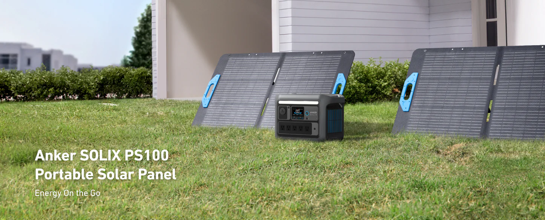
Solar charging at campsites depends heavily on the quality, angle, and consistency of sunlight. Campers quickly discover that not all sunlight delivers the same charging performance. Weather patterns, terrain, time of day, seasonal shifts, and shadows can all limit how much energy a portable solar panel can produce. Even high-efficiency gear requires the right conditions to generate usable power. Understanding these limits helps campers plan better, choose stronger charging habits, and avoid running out of power during important moments outdoors. The Anker SOLIX PS100 Portable Solar Panel supports charging even in variable conditions thanks to its adjustable angles, durable ETFE coating, and 23% conversion efficiency. Knowing how different sunlight conditions affect performance makes it easier to get the best results from your portable setup.
Natural Conditions That Restrict Camp Solar Charging
Thick Cloud Cover Significantly Reduces Direct Sunlight on the Panel
Cloudy skies are one of the most common conditions limiting solar output. When clouds block direct sunlight, the panel receives only diffused light, which carries far less energy. The PS100 still works during cloudy periods because monocrystalline cells can convert scattered light into usable power, but the output is noticeably lower. Campers may need longer charging windows or more optimal positioning to compensate. Rotating the panel toward brighter portions of the sky helps improve performance slightly. While no portable panel eliminates this limitation, the PS100’s 23% conversion efficiency allows it to gather more energy than standard low-efficiency panels in the same conditions. Cloud-heavy days require strategy, patience, and smart energy planning to avoid shortages.
Dense Forest Shade Interrupts Steady Energy Production
Shade from trees, branches, or mountain features breaks the flow of direct sunlight. Even brief interruptions from wind-blown leaves or shifting shadows can disrupt the charging curve. Forest campsites often feel comfortable but create inconsistent solar conditions. A portable panel needs clear exposure to perform well. The PS100 improves usability slightly through adjustable angles—campers can tilt the panel to 30°, 40°, 50°, or 80° to catch small patches of available light between trees. However, heavy shade remains one of the strongest limiting factors for all solar systems. Relocating the panel to a clearing or attaching it to a hiking pack during movement often resolves the issue and restores charging performance.
Low Winter Sunlight Reduces Intensity and Shortens Daily Charging Hours
Seasonal changes dramatically affect solar output. Winter sunlight arrives at lower angles, offers less intensity, and provides fewer daytime hours. These conditions naturally limit charging potential. The PS100’s adjustable angles help compensate by allowing campers to stand the panel nearly upright during winter afternoons, capturing sunlight that arrives almost horizontally. Despite this advantage, total wattage still drops compared to summer. Shorter days also require campers to prioritize essential charging windows more deliberately. A strong habit of starting early and maximizing midday exposure becomes crucial. Understanding seasonal limitations helps campers avoid overestimating how much energy they can realistically generate in colder months.
Environmental and Terrain Factors That Complicate Solar Collection
Mountain Shadows Block Sunlight Earlier and Later in the Day
Campsites near mountain walls, cliffs, or steep terrain often lose sunlight several hours earlier than open landscapes. Even on sunny days, these early shadows cut down the total charging window. Morning fog in valleys can also delay sunlight arrival. The PS100 thrives in open areas, but terrain restrictions force campers to adapt by choosing campsites with better exposure or using the panel while hiking rather than waiting until camp. Because the panel weighs only 4.4 kg and folds compactly, moving it frequently is manageable. High-efficiency monocrystalline cells make every minute of sunlight count, but terrain shadows remain a firm natural limitation all campers must consider.
Dust, Snow, or Debris Reduce Surface Efficiency
A portable solar panel needs clean access to sunlight. Dusty trails, falling needles, blowing sand, and even light snow reduce transparency on the panel’s surface, preventing full sunlight absorption. The panel solar camping PS100’s ETFE coating makes it easy to wipe clean and protects the panel from scratches that could degrade performance. Campers should check the panel regularly to remove dirt or debris, especially in desert, forest, or windy mountain conditions. While surface contamination is easy to address, neglecting it turns even a clear sunny day into a low-output charging session. Maintaining a clean panel is simple but essential for keeping wattage strong.
See also: Communication Challenges in Technology
Uneven Sun Tracking Leads to Lost Charging Potential Over Time
The sun moves constantly, but a stationary solar panel does not. If the angle is not adjusted every few hours, the panel may receive indirect light for much of the day. This reduces total energy captured even when the sky is clear. With four preset angles, the PS100 simplifies tracking by giving campers quick options for different sun positions. Adjusting the angle two or three times per day significantly boosts energy production. However, failure to reposition the panel limits even the most efficient solar gear. Tracking sunlight is a human task, not a technological one—and overlooking it can cut total charging output by half or more.
Conclusion
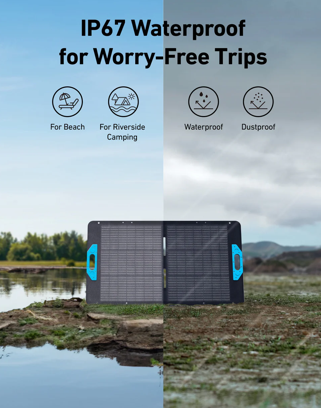
Solar charging at campsites depends on sunlight quality, exposure, and consistency, and certain natural conditions limit how much energy a portable panel can collect. Thick cloud cover reduces intensity, forest shade interrupts steady input, and winter sunlight shortens available charging hours. Terrain features like mountains create early shadows, while debris or snow lowers surface efficiency. Even human factors—such as failing to adjust the panel’s angle—restrict overall performance. The Anker SOLIX PS100 Portable Solar Panel helps campers overcome many of these limitations through high-efficiency monocrystalline cells, four adjustable angles, rugged ETFE coating, and an IP67 waterproof build. By planning around environmental constraints and adopting smart charging habits, campers stay powered confidently and maximize the possibilities of a panel solar camping setup in the wild.