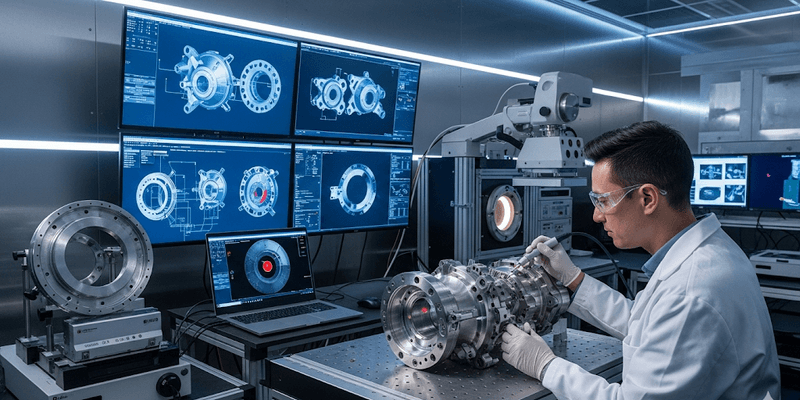
Engineering and materials science are evolving at an extraordinary pace. Industries such as aerospace, automotive manufacturing, energy, and infrastructure rely heavily on understanding how materials behave under stress. For decades, mechanical testing has been the foundation of this knowledge. It allows engineers to determine strength, durability, elasticity, fracture resistance, and long-term reliability before materials are used in critical applications.
However, the methods used in many laboratories have traditionally relied on manual procedures, time-consuming experimentation, and destructive testing techniques. While these approaches have delivered reliable data for decades, modern engineering demands faster results, deeper insights, and smarter analysis.
In 2026, the landscape of mechanical testing is transforming rapidly. Artificial intelligence is being integrated into testing laboratories, enabling smarter data interpretation and predictive analysis. At the same time, advances in non-destructive testing technologies are allowing engineers to evaluate materials without damaging them, opening the door to safer inspections and longer-lasting components.
These innovations are reshaping how engineers understand materials, predict failure, and design more reliable products. The future of mechanical testing is not simply about applying force and measuring results; it is about combining advanced sensors, intelligent algorithms, and non-invasive analysis to uncover material behavior with unprecedented accuracy.
The Traditional Role of Mechanical Testing in Material Science
Mechanical testing has long been essential for determining how materials respond to external forces. Engineers use these methods to evaluate properties such as tensile strength, fatigue resistance, ductility, hardness, and toughness. These characteristics define how a material performs when it is stretched, compressed, bent, or repeatedly loaded.
Historically, mechanical testing has relied on controlled laboratory experiments where samples are subjected to carefully measured forces until deformation or failure occurs. These tests provide valuable information about how materials behave under stress, helping engineers determine whether a material is suitable for specific applications.
Although traditional methods remain fundamental, they often involve destructive processes in which samples are permanently damaged or broken during testing. While destructive testing provides precise insights into failure mechanisms, it also consumes materials, requires repeated sample preparation, and sometimes limits the ability to monitor real components in operation.
Modern industries increasingly require faster feedback cycles, more predictive insight, and the ability to evaluate materials without damaging them. These needs are driving the integration of artificial intelligence and non-destructive technologies into the future of mechanical testing.
Artificial Intelligence Is Transforming Mechanical Testing Laboratories
Artificial intelligence is rapidly becoming one of the most influential technologies in materials science and engineering laboratories. By analyzing large volumes of experimental data, AI systems can detect patterns that might be difficult for human researchers to identify.
In mechanical testing environments, AI algorithms are being used to interpret complex datasets generated during experiments. Modern testing machines produce enormous amounts of information, including stress-strain curves, acoustic signals, microscopic deformation patterns, and real-time sensor readings. Artificial intelligence can process this data in seconds, revealing insights about material performance and potential failure mechanisms.
AI-powered laboratories are increasingly capable of automating experimental workflows. Robotic systems can prepare samples, run tests, and collect measurements while intelligent software analyzes the results in real time. This automation significantly reduces human error and accelerates research timelines.
Machine learning models are also improving predictive capabilities. By studying historical testing data, these systems can estimate how new materials might behave under different conditions before full experiments are conducted. This predictive power helps researchers narrow down promising material candidates more efficiently.
As AI continues to mature, it is likely to become an integral component of mechanical testing laboratories, enabling faster discoveries and more reliable material performance predictions.
Smart Sensors and Data-Driven Mechanical Testing
Another major advancement shaping the future of mechanical testing is the integration of advanced sensor technologies. Traditional testing machines measure forces and displacement, but modern systems incorporate a much broader array of sensors that capture detailed information about material behavior.
High-resolution strain sensors, acoustic emission detectors, infrared imaging systems, and digital image correlation technologies now allow researchers to observe how materials deform at microscopic levels. These sensors provide insights into stress distribution, crack formation, and internal structural changes.
When combined with AI-driven analysis, these sensor systems create powerful data-driven testing environments. Researchers can monitor material behavior in real time and detect early signs of fatigue, fracture, or instability before catastrophic failure occurs.
This shift toward sensor-rich testing environments enhances the ability to study materials under realistic conditions. It also allows engineers to refine product designs based on more accurate insights into how materials behave in complex operating environments.
The Rise of Non-Destructive Testing Technologies
One of the most exciting developments in modern mechanical testing is the growing use of non-destructive testing techniques. Unlike traditional destructive tests, these methods evaluate materials and components without permanently damaging them.
Non-destructive approaches allow engineers to inspect finished products, infrastructure, and machinery while they remain in service. This capability is particularly valuable in industries where safety and reliability are critical.
Techniques such as ultrasonic testing, electromagnetic inspection, radiographic imaging, and advanced optical scanning allow engineers to detect internal flaws, cracks, and structural irregularities. These technologies can reveal hidden defects that might not be visible on the surface.
Non-destructive mechanical testing is increasingly used to evaluate fatigue damage, corrosion, internal voids, and structural weaknesses. Because components remain intact after inspection, they can continue to operate while being monitored for potential issues.
This approach significantly improves maintenance strategies, enabling engineers to detect problems early and prevent costly failures.
Combining AI with Non-Destructive Mechanical Testing
The most significant breakthroughs in mechanical testing are emerging from the combination of artificial intelligence and non-destructive inspection technologies. Together, these innovations create intelligent diagnostic systems capable of identifying hidden material defects with remarkable precision.
AI algorithms can analyze complex signals generated by ultrasonic waves, vibration sensors, or imaging equipment. These signals often contain subtle patterns that indicate structural damage or material fatigue. Machine learning models trained on large datasets can recognize these patterns quickly and accurately.
For example, an AI system might analyze ultrasonic inspection data from a metal component and detect microscopic cracks that would otherwise be difficult for human inspectors to identify. By recognizing early warning signs, engineers can repair or replace components before they fail.
This integration also enables continuous monitoring of structures and machinery. Instead of relying on periodic inspections, smart systems can track material health over time, creating predictive maintenance strategies that enhance safety and reduce downtime.
The ability to combine mechanical testing data with intelligent analysis is transforming how industries approach material reliability.
Digital Twins and Predictive Material Analysis
Another emerging trend connected to modern mechanical testing is the development of digital twins. A digital twin is a virtual model that replicates the physical behavior of a real-world object or system.
By combining mechanical testing data with advanced simulations, engineers can create digital replicas of materials and components. These models simulate how materials respond to various loads, environmental conditions, and operating stresses.
Artificial intelligence enhances digital twin technology by continuously updating the model based on real-world testing results. As new data becomes available, the digital twin becomes more accurate in predicting future performance.
This predictive capability allows engineers to anticipate material fatigue, structural degradation, and potential failure scenarios long before they occur. Instead of reacting to damage after it happens, engineers can make proactive design or maintenance decisions.
Digital twin technology is becoming increasingly valuable in industries where reliability is critical, including aerospace engineering, energy systems, and large-scale infrastructure projects.
Why the Evolution of Mechanical Testing Matters
The rapid evolution of mechanical testing technologies is more than a scientific advancement; it represents a shift in how industries manage risk, safety, and innovation.
AI-powered laboratories enable faster material development and more efficient research processes. Non-destructive testing methods allow engineers to evaluate materials without compromising structural integrity. Advanced sensors and predictive models provide deeper insights into material behavior.
Together, these developments support the creation of safer products, more reliable infrastructure, and longer-lasting machinery. Engineers can now design materials and structures with a clearer understanding of how they will perform over time.
As global industries face increasing demands for sustainability, durability, and efficiency, the importance of advanced mechanical testing methods will continue to grow.
Frequently Asked Questions About Mechanical Testing
What is mechanical testing?
Mechanical testing is the process of evaluating how materials respond to physical forces such as tension, compression, bending, or impact. These tests help engineers determine properties like strength, toughness, flexibility, and durability.
How is artificial intelligence used in mechanical testing?
Artificial intelligence analyzes large datasets generated during experiments. It helps identify patterns in material behavior, predicts potential failure mechanisms, and improves the accuracy of experimental results.
What is non-destructive mechanical testing?
Non-destructive mechanical testing refers to methods that evaluate material properties or detect defects without permanently damaging the tested component. This allows structures and machinery to remain operational after inspection.
Why is non-destructive testing becoming more important?
Non-destructive testing allows engineers to inspect materials and structures without causing damage. This approach improves safety, reduces costs, and enables continuous monitoring of critical systems.
What industries rely on advanced mechanical testing technologies?
Industries such as aerospace, automotive manufacturing, energy production, construction, and infrastructure development rely heavily on mechanical testing to ensure material safety and reliability.
What role do sensors play in modern mechanical testing?
Advanced sensors capture detailed data about stress, strain, temperature, and deformation during experiments. These measurements provide deeper insights into how materials behave under different conditions.
Conclusion: A Smarter and Safer Future for Mechanical Testing
Mechanical testing has always been essential for understanding the strength and reliability of materials, but the field is entering a new era of technological advancement. The integration of artificial intelligence, advanced sensors, and non-destructive inspection methods is transforming traditional laboratory practices into intelligent, data-driven systems.
AI-powered laboratories are accelerating research and improving the interpretation of complex testing data. Non-destructive technologies are enabling engineers to examine materials without damaging them, allowing for safer inspections and more effective maintenance strategies. Digital twins and predictive modeling are further expanding the ability to anticipate material performance before problems arise.
Together, these innovations represent a major step forward in how engineers evaluate and design materials. As industries continue to demand stronger, lighter, and more durable materials, advanced mechanical testing will remain a critical tool for ensuring safety and performance.
The future of mechanical testing lies in smarter laboratories, deeper insights, and more precise diagnostics. By combining intelligent analysis with innovative inspection techniques, engineers are gaining an unprecedented understanding of how materials behave under stress. This progress not only strengthens engineering practices but also helps build a safer and more resilient world.