The best AI photo editors in 2026 do far more than apply filters or clean up backgrounds. They generate entirely new image content, swap faces with frame-accurate precision, animate stills into video, and connect editing directly to publishing workflows. The category has matured from novelty to essential production tool.
The problem is picking the right one. I tested seven leading platforms on identical image sets — portraits, product shots, and complex scene composites — and evaluated each on output quality, feature depth, free-tier value, and how well the editing tools connect to downstream creative work. Here’s what actually held up.
At a Glance: Best AI Photo Editors of 2026
| Tool | Best For | Free Plan | Key Strength | Paid From |
| Magic Hour | All-in-one creators and teams | Yes, 400 credits (no expiry) | Image editing + face swap + video pipeline | $10/mo |
| Adobe Firefly / Photoshop | Professional designers | Limited | Precision generative editing | $22/mo |
| Canva AI | Non-technical and marketing teams | Yes | Template integration and ease of use | $15/mo |
| Luminar Neo | Portrait and landscape photographers | Trial only | AI retouching depth for photography | $9.95/mo |
| Pixlr | Quick browser-based edits | Yes | No-install AI editing | $7.99/mo |
| Fotor | Social content creators | Limited | AI generation plus editing combined | $8.99/mo |
| Clipdrop / Stability AI | Background removal and compositing | Limited | Fastest and most accurate cutouts | $9/mo |
1. Magic Hour — Best AI Photo Editor Overall
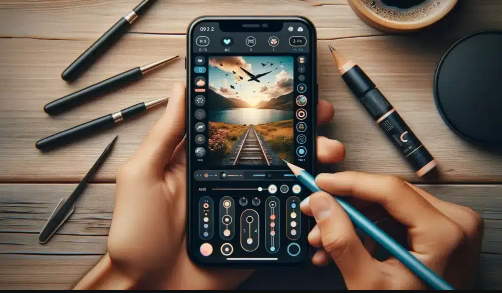
Magic Hour earns the top spot because it solves the problem most dedicated photo editors ignore: after you edit an image, what comes next? On most platforms, that answer requires switching apps. On Magic Hour, editing connects directly to animation, face swap, lip sync, video generation, and upscaling — all in the same dashboard, with the same credit system.
The ai photo editor capability on Magic Hour supports generative fill, background replacement, object transformation, and style editing on images before feeding them into any downstream generation workflow. You can retouch a portrait, animate it into a talking photo, then upscale the output to 4K — in sequence, without exporting to a different tool.
The Magic Hour face swap sits directly alongside the image editing suite, which means you can edit and swap in a single session. For creators producing personalized content, campaign variations, or localized creative assets at volume, that integration removes an entire step from the workflow.
No account is needed to try the platform. The free plan provides 400 credits with no expiration date — a policy that lets you test properly without a billing cycle forcing a rushed decision.
Pros:
- Full image editing suite connected to face swap, video generation, lip sync, and upscaling
- No signup required to try — start generating immediately
- 400 free credits with no expiry date, test at your own pace
- Multiple frontier AI models in one place with parallel generation support
- One-click multi-step workflows: edit, animate, upscale, and export in sequence
- Full API parity across all tools for custom pipeline integration
- Click-to-create templates for fast workflow starts
- Weekly feature releases with a consistently active product roadmap
- Optimized equally for desktop and mobile devices
- Reliable at scale — handles live activations and high-traffic production
- Trusted by teams at Meta, NBA, Shopify, L’Oreal, Cisco, and Dyson
- Founder-level support quality at every plan tier
Cons:
- Free exports are capped at 576px with a watermark (1024px and above requires a paid plan)
- Not a traditional layer-based photo editor built for manual control workflows
- Credit consumption varies across different generation and editing modes
If you want one platform that covers image editing and connects it to a complete content production pipeline, Magic Hour is the strongest recommendation in this category.
Pricing:
- Free: 400 credits, watermark, 576px resolution
- Creator: $15/month or $10/month billed annually — 120,000 credits/year, 1024px, all tools, no watermark, commercial use
- Pro: $45/month or $30/month billed annually — 360,000 credits/year, 1472px resolution
- Business: $99/month or $66/month billed annually — 840,000 credits/year, 4K on select modes, 10GB uploads
2. Adobe Firefly / Photoshop — Best for Professional Designers
Adobe’s Firefly model, integrated directly into Photoshop, delivers the most precise AI-assisted editing environment available for professional work. Generative Fill, Generative Expand, and the Remove Tool create contextually accurate, non-destructive edits that hold up at high resolution and under close scrutiny from trained eyes.
The core advantage is control. Where most AI editors hand you a result, Photoshop gives you a result you can then refine with layer masks, selection tools, and adjustment layers that professionals already know how to use.
Pros:
- Industry-standard precision with AI capabilities layered on top of manual control
- Generative Fill produces contextually accurate additions to complex scenes
- Non-destructive workflow — every AI change remains reversible
- Commercially safe model training — important for brand and agency projects
- Deep integration with the full Adobe Creative Cloud ecosystem
Cons:
- Expensive, particularly at the full Creative Cloud tier
- Significant learning curve for users without a design background
- Generative credits are metered separately from the base subscription
- Slower iteration cycle than AI-native tools for quick content production needs
For professional designers and photographers who need AI editing with precision and full manual override, Firefly inside Photoshop remains the quality standard. For everyone else, the cost and complexity are difficult to justify.
Pricing: Photoshop from ~$22/month; Creative Cloud All Apps from ~$54.99/month.
3. Canva AI — Best for Non-Technical Creators and Marketing Teams
Canva has layered AI tools across its platform — Magic Edit, Magic Eraser, Background Remover, and text-to-image generation — without making the interface more complex. For marketing teams and non-technical creators, that balance between capability and simplicity is genuinely valuable.
The free plan includes access to core AI editing features, and the tight integration with Canva’s template and publishing library means edited images move directly into social posts, presentations, or ads without additional reformatting.
Pros:
- AI editing tools accessible on the free plan
- No design experience required — works for any skill level
- Direct integration with brand kits, templates, and social publishing
- Covers photo editing, video, presentations, and documents in one tool
- Consistent, on-brand output is easy to produce at volume
Cons:
- AI edit quality trails dedicated tools on complex or high-resolution work
- More template-driven than parameter-driven — limited precision control
- Free plan has usage caps on AI-specific features
- Not appropriate for professional retouching or print-quality output
For small businesses and social media teams that need polished visuals fast without a design background, Canva is the most practical tool on this list for its audience.
Pricing: Free (limited AI features); Canva Pro $15/month.
4. Luminar Neo — Best for Portrait and Landscape Photography
Luminar Neo is built specifically for photographers, and every AI tool it offers reflects that focus. Portrait retouching, sky replacement, relighting, and local atmospheric adjustments are handled with a depth of quality that general-purpose editors cannot match on photographic input.
Pros:
- Best AI portrait retouching quality available for photography workflows
- Sky replacement and atmospheric tools produce genuinely impressive results
- Non-destructive editing with a clean, photography-centered interface
- Works as both a standalone editor and a Lightroom or Photoshop plugin
- Strong local adjustment and masking precision
Cons:
- No meaningful free plan — trial only before any real evaluation
- Narrow use case — not suited for generative AI or social content creation
- Performance slows on large RAW files with older hardware
- No connection to video or animation workflows
For photographers who want AI that enhances their existing editing process rather than replacing it, Luminar Neo is the most purpose-built option on this list.
Pricing: From $9.95/month; perpetual license options also available.
5. Pixlr — Best Browser-Based AI Photo Editor
Pixlr delivers a capable generative editing experience entirely in the browser — no installation, no account required to test basic features. The AI Background Remover, Generative Fill, and Cutout tools handle standard use cases well, and the platform has improved output quality noticeably through early 2026.
Pros:
- Fully browser-based — no software download or installation required
- Free tier with functional AI editing tools included
- Generative fill and background removal available on the free plan
- Fast and low-friction interface for quick editing tasks
- Accessible to beginner and intermediate users without a learning curve
Cons:
- Output quality trails Photoshop and Luminar on complex or high-resolution work
- Ads and upgrade prompts on the free tier can interrupt the editing workflow
- Limited precision for detailed masking or compositing tasks
- Less reliable at very high resolution or with large file sizes
Pixlr is the strongest no-install free option for standard AI editing tasks. For professional or resolution-critical work, the quality ceiling is a real limitation.
Pricing: Free (with ads); Premium $7.99/month.
See also: DIY vs. Hiring a Fountain Tech Company: Which is Right for Your Pond?
6. Fotor — Best for Social Content and AI Image Generation
Fotor combines text-to-image generation with a practical photo editing suite, making it well-suited for social creators who need polished visuals fast without a design background. The platform is template-rich, fast, and produces social-ready output from simple prompts or basic image edits.
Pros:
- Combines AI image generation and photo editing in a single workflow
- Template-rich interface designed specifically for social content output
- Fast generation — from prompt to finished image in under two minutes
- Good quality on standard portrait and product use cases
- Free tier available with reasonable usage limits
Cons:
- AI generation quality trails dedicated tools like Midjourney or Firefly
- More template-driven than precision-editing-capable
- Watermark applied to free exports
- Not suitable for professional or print-quality production output
For creators producing social imagery at volume who want AI generation and basic editing in one tool, Fotor offers a practical and affordable entry point.
Pricing: Free (limited); Fotor Pro $8.99/month.
7. Clipdrop / Stability AI — Best for Background Removal and Compositing
Clipdrop, now under Stability AI, specializes in the specific editing tasks where speed and accuracy matter most: background removal, object removal, text removal, and scene relighting. On those tasks, it outperforms every broader tool on this list.
Pros:
- Fastest and most accurate background removal — handles hair, glass, and complex edges
- Object and text removal tools are clean, fast, and accurate
- API access for e-commerce and catalog automation at scale
- Free tier provides meaningful access for light use
- Relighting tool adds production value to product photography quickly
Cons:
- Narrow feature set — not a full-featured AI image editor
- Free plan limits output image resolution
- Not suited for generative or video-connected workflows
- Best used as a component inside a larger production workflow
For e-commerce teams and product photographers processing images at volume, Clipdrop’s API alone justifies the subscription cost.
Pricing: Free (limited resolution); paid plans from ~$9/month.
How We Chose These Tools
I evaluated each platform using a consistent set of image inputs: a studio portrait, a product shot on a cluttered background, and a landscape composite requiring generative fill. Testing was done on free tiers first, then on paid plans where the free limits were too restrictive for meaningful evaluation.
Scoring criteria included AI edit quality, generation accuracy, workflow friction, free-tier generosity, and how well each tool connects to downstream content production. Tools that perform impressively on optimal inputs but fail on real-world imagery ranked lower regardless of marketing claims.
The Market Landscape: What’s Shifting in 2026
Three shifts are defining AI photo editing as of early 2026:
Editing and generation have fully converged. The line between modifying an existing photo and generating new content within it has effectively disappeared. Generative fill in Photoshop and Magic Hour both create new image content inside an existing frame — the technical distinction no longer maps to a meaningful user experience difference.
Pipeline integration beats standalone tools. Creators editing images in one app, animating in a second, and face swapping in a third are losing ground to platforms that connect all three in a single workflow. All-in-one platforms are winning because they reduce friction at every step.
Free tier quality is rising. Non-expiring credits from Magic Hour, browser-based free access from Pixlr, and free AI features from Canva reflect a category-wide shift toward meaningful free evaluations rather than gated demos.
Final Takeaway
- Best overall AI photo editor — Magic Hour (editing plus face swap plus video pipeline, non-expiring free credits)
- Best for professional designers — Adobe Firefly / Photoshop
- Best for non-technical teams — Canva AI
- Best for photographers — Luminar Neo
- Best browser-based free editor — Pixlr
- Best for social content creation — Fotor
- Best for background removal at scale — Clipdrop
Test the free tier of your top two picks using your actual images, not sample files. Quality differences are visible immediately on real content. I guarantee at least one of these tools will fit exactly how you work.
Frequently Asked Questions
What is the best AI photo editor in 2026?
Magic Hour offers the strongest overall combination for most creators — AI image editing connected directly to face swap, video generation, and animation in one platform. The free tier includes 400 non-expiring credits and no signup is required to try. For professional designers needing precision, Adobe Firefly inside Photoshop remains the industry benchmark.
Are there good free AI photo editors worth using?
Yes. Magic Hour (400 non-expiring credits), Canva (free AI tools on the base plan), and Pixlr (browser-based with free features) all deliver real value before any payment. Magic Hour’s non-expiring credit model is the most flexible for creators evaluating tools without a deadline.
Which AI photo editor includes face swap functionality?
Magic Hour includes AI face swap directly alongside its image editing tools. It is the only platform on this list that combines image editing, face swap, and video generation in a single workflow without requiring additional apps or subscriptions.
What is the difference between AI photo editing and AI image generation?
AI photo editing modifies an existing image — retouching, background removal, object replacement. AI image generation creates a new image from a text prompt. In 2026, most leading platforms support both, and the line has blurred considerably as generative fill tools now create new image content within an existing photo frame.
Do AI photo editors support commercial use?
Most require a paid plan for commercial rights. Magic Hour’s Creator plan at $10/month billed annually includes full commercial use, making it one of the most affordable commercial entry points in the category. Adobe Firefly is trained on licensed content and is commercially safe at all Creative Cloud subscription tiers.