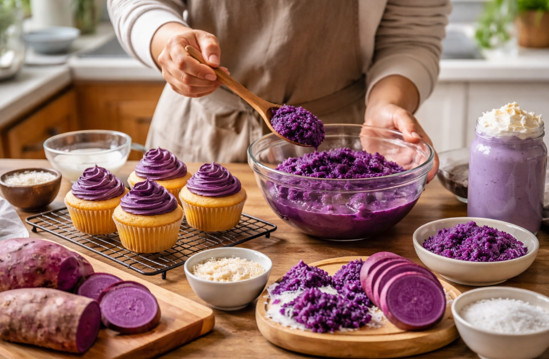
Ube purple yam has a way of drawing attention before the first bite even happens. The colour feels almost theatrical on the plate, though colour alone never makes a recipe memorable. What people really want to know is how to use ube in a way that brings out its naturally sweet, earthy, slightly nutty character without wasting ingredients or ending up with a dull paste. That matters because ube can be rewarding in the kitchen, though it can also disappoint when it is treated like any other root vegetable. Its moisture level, sweetness, texture, form, and cooking method all change the final result in a noticeable way. A smooth filling, a soft cake batter, a creamy drink, or a spoonable jam each ask for a different approach. The goal is not simply to make something purple. The goal is to make something that tastes full, balanced, and coherent. That is where technique becomes useful. Once you understand how fresh ube behaves, how frozen grated ube differs, how powder absorbs liquid, which ingredients lift the flavour, and which mistakes flatten it, cooking with ube becomes much easier. Think of it as a small compass in the kitchen: once you know where sweetness, starch, and moisture are pointing, the rest of the recipe starts to make sense. The sections below focus on practical use, common errors, ingredient pairings, and recipe choices that help ube purple yam taste as good as it looks.
What ube purple yam really tastes like in cooking?
Understanding the flavour of ube makes cooking decisions much easier, because many disappointing recipes come from the wrong expectation rather than bad technique. Ube is often described as sweet, nutty, mellow, earthy, and lightly vanilla-like, though its flavour is not as loud as people assume when they see the colour. It does not hit the palate like a strong berry, a sweet potato casserole, or a bold tropical fruit. Its appeal is softer, rounder, more delicate. That is why recipes built around ube need enough support from fat, dairy, sugar, salt, or aromatic ingredients to let the yam express itself clearly. When people expect a dramatic taste from colour alone, they tend to oversweeten the dish or add heavy flavourings that drown the ube entirely. A better approach is to treat it like a subtle base with personality. It has body, a creamy starchiness, a gentle sweetness, and a grounded flavour that becomes richer when it is steamed, boiled, mashed, baked, or simmered into spreads and fillings. This also explains why ube desserts are so common. Milk, coconut, condensed milk, butter, cream, and egg yolks give it the stage it needs without pushing it off the plate. At the same time, ube does not have to stay inside dessert. It can work in breakfast bowls, pancakes, soft breads, filled buns, custards, and even savoury combinations when salt, spice, or cheese are used with restraint. Another point matters here: people often confuse ube purple yam with taro, purple sweet potato, or other purple roots. They may look related from a distance, though they do not cook in exactly the same way, and they do not taste identical. That confusion leads to mismatched methods, poor moisture control, or recipes that feel close without ever becoming truly satisfying. When you know that ube brings a mild, creamy, slightly floral sweetness rather than a sharp or sugary punch, you stop forcing it. You start building around it, which is usually when the dish begins to feel complete.
How should you prepare ube before adding it to a recipe?
If you want reliable results, preparation is where the real work begins. Fresh ube needs more attention than many people expect, because it is dense, starchy, and sometimes fibrous depending on maturity and storage. The skin should be peeled carefully, since the flesh can be firm and uneven near the outer layer. From there, the yam can be cut into chunks for steaming or boiling, grated for quicker cooking, or roasted when you want a drier, more concentrated texture. Steaming is often the safest choice for recipes that need a bright flavour with moderate moisture, because it cooks the yam through without flooding it with water. Boiling is practical, though it can soften the flavour slightly if the pieces stay submerged too long. Roasting creates a deeper note and a less watery mash, which can be useful in cakes, buns, fillings, or doughs. Once cooked, ube should be mashed or blended while still warm if a smooth texture matters. Lumps become harder to remove after it cools, especially in batter-based recipes. This is also the stage where people start deciding which product form suits their needs. If fresh ube is hard to find, frozen grated ube can save time and still deliver good flavour. Powdered ube is convenient too, though it behaves differently because it absorbs liquid quickly and may need extra moisture to avoid a chalky or dry result. When people shop for ube purple yam, it helps to think ahead about the final dish rather than buying the first format available. A spread, a latte, a chiffon cake, a loaf, or a pancake batter will not all need the same base. Fresh or frozen ube is usually better when texture carries the dish. Powder works well when colour, convenience, and controlled flavour matter more. One more small detail makes a major difference: always add a pinch of salt, even in sweet recipes. Salt does not make ube salty. It sharpens the edges of the flavour and keeps sweetness from tasting flat. That single move often separates a pleasant purple mash from something you genuinely want another spoonful of.
Which recipes bring out the best in ube?
The best ube recipes are the ones that respect both its starch and its softness. That sounds simple, though it changes how you choose a dish. Recipes that rely on smoothness, tenderness, and slow flavour release tend to flatter ube far more than recipes that expect intense sweetness or crisp edges. Ube halaya is a good example because the yam is cooked down with milk, fat, and sugar until the texture turns rich and glossy. The result is concentrated, spoonable, and satisfying. Soft cakes, muffins, quick breads, and loaf cakes also work well because the batter holds moisture around the ube and protects its flavour during baking. Pancakes and waffles can be excellent too, though only when the batter stays light enough to avoid a gummy middle. Frozen desserts have their place as well. Ube ice cream, cheesecake filling, mousse, and custard showcase the colour without demanding a strong baked structure. What matters most is balance. If the dish is too dense, the yam can feel heavy. If the recipe is too wet, the flavour thins out. If the sugar is pushed too far, the profile becomes one-note.
Sweet uses that keep the flavour clear
Sweet preparations usually give ube purple yam the most room to shine, though not all sweet recipes are equally effective. A good ube filling for buns or rolls should be thick enough to stay in place, though soft enough to spread without tearing the dough. A cake batter should have enough fat to stay tender, though not so much that the yam disappears into plain richness. Frostings and buttercreams can look beautiful, though they often carry more sugar than flavour, which is why they work best when combined with a cake or pastry that already contains real ube in the crumb. Drinks such as ube lattes or milkshakes can be pleasant, though they need restraint. Too much syrup or powder can make them taste artificial rather than comforting. There is usually more depth in a simple base made with real mashed ube, warm milk, a touch of vanilla, and only enough sweetener to lift the natural notes. Think of ube as velvet rather than fireworks. It does not need to explode on the palate to be memorable. It needs the right support, the way a soft light improves a room without demanding attention for itself. That is why restrained sweetness often produces the most convincing results.
Savoury uses that still make sense
Savoury cooking with ube can work, though it demands a lighter touch and a clear purpose. A simple mash served beside grilled meat, roasted mushrooms, or a mildly seasoned fish can be appealing when butter, salt, and a little pepper are used carefully. Ube can also be folded into dough for buns or flatbreads where the flavour acts more like a background note than a centrepiece. Cheese can pair well with ube, especially fresh, creamy, or mildly salty types that create contrast without overwhelming the yam. What rarely works is treating ube like a neutral potato in a strongly savoury dish full of garlic, hot spices, vinegar, or aggressive herbs. Those flavours tend to bulldoze its finer notes. The best savoury uses keep the seasoning simple and let the yam contribute body, colour, and a gentle sweetness that rounds the plate. When the dish feels thoughtful rather than forced, ube becomes more than a novelty ingredient. It becomes a useful one.
Why ube can turn dry, bland, or heavy in the kitchen?
Many common problems with ube come from moisture control. A dry result usually means the recipe did not include enough liquid, fat, or binding ingredients for the starch level of the yam being used. This happens often with powdered ube, which absorbs moisture quickly and can make batters tighten faster than expected. It also happens with roasted or overcooked fresh ube that has lost too much internal water before it even reaches the mixing bowl. On the other side, a bland result often points to underseasoning rather than poor ingredients. Ube needs help from salt, moderate sweetness, and sometimes vanilla, coconut, butter, or dairy to taste full. Left on its own, it can come across as muted, especially in baked goods where flour and eggs compete with it. Heavy textures usually come from overmixing, oversweetening, or choosing a recipe that treats ube like a colour additive rather than a real starchy component. If you keep adding mash or powder without adjusting the liquid and structure of the recipe, the batter becomes dense. The centre bakes slowly, the crumb tightens, and the final product feels pasty. That is why it helps to think of ube as both a flavour ingredient and a textural ingredient. It is not just there to tint a dough purple. It brings starch, fibre, bulk, and natural sweetness. Those qualities affect the entire build of a dish. Another mistake appears in storage. Cooked ube mash that sits uncovered in the fridge can dry out quickly, which later causes lumps or uneven blending. Batter that rests too long may thicken beyond recovery. Fillings chilled too hard can lose spreadability. A practical way to avoid most of these issues is to taste at every stage where tasting is possible. Taste the mash before it enters the batter. Taste the filling before it goes into the pastry. Taste the sauce before it cools. That habit reveals whether the dish needs more salt, a little more sugar, more fat, or more liquid. It also keeps you from solving a flavour problem with extra sweetness alone, which is one of the fastest ways to flatten the character of ube purple yam in cooking.
See also: 5 Life Changing Outpatient Treatments for Corporate Employees
What ingredients pair naturally with ube purple yam?
Pairing matters because ube is subtle, not weak. Its flavour becomes more expressive when the supporting ingredients are chosen with intention. Coconut is one of the most effective partners because it echoes the tropical side of ube while adding fat and aroma. Dairy works well too, especially milk, evaporated milk, cream, cream cheese, and butter, which help carry the flavour across the palate. Vanilla can support ube in a natural way when used gently, while too much makes everything taste like standard vanilla dessert with a purple colour. Brown sugar, maple, and condensed milk can all be useful, though balance is critical. Salt is essential. A tiny amount creates contrast and clarity. Cinnamon can be pleasant in very small doses, though stronger spices tend to dominate. Nuts such as coconut flakes, toasted sesame, cashew, pecan, or almond can add crunch and warmth when the rest of the dish stays simple. Citrus zest can brighten heavy mixtures, especially in fillings or custards, though strong juice acidity may clash with dairy if the recipe is not built carefully. For texture contrast, ube loves soft crumbs, creamy centres, glossy custards, and crisp toppings that do not fight with its softness. Useful pairings often include:
- Coconut
- Vanilla
- Butter
- Cream
- Milk
- Cheese
- Maple
- Sesame
- Cashew
- Salt
That list works because it reflects what ube needs most: moisture, roundness, contrast, and gentle lift. Good pairing is less about piling on flavour than about creating a frame that lets the yam speak clearly. A cream-based dessert with coconut and a pinch of salt can make ube taste deeper. A soft bun with a slightly salted ube filling can feel more complete than a much sweeter pastry. Even in breakfast recipes, pairing is decisive. Oat-based bowls may need more dairy or coconut to avoid tasting too plain. Pancakes may need a richer topping such as whipped mascarpone or lightly salted butter rather than syrup alone. Pairing is also where visual appeal and flavour can support each other without becoming gimmicky. The colour of ube behaves like a spotlight on the plate, though the supporting cast still matters. When the partners are too loud, the spotlight becomes pointless. When the partners are chosen well, the dish feels calm, coherent, and far more memorable.
What mistakes make ube harder to use than it needs to be?
The most common mistake is chasing colour instead of flavour. Many home cooks see the vivid purple tone and assume the most successful recipe will be the brightest one. That leads to poor decisions: too much extract, too much powder, too much sweetener, or a recipe built almost entirely around appearance. Real satisfaction comes from texture and taste, not from the strongest shade in the baking pan. Another mistake is choosing the wrong product form without adjusting the method. Fresh ube, frozen grated ube, puree, jam, and powder each behave differently. Swapping one for another without reducing or adding liquid can throw off the structure of the recipe. A third error is undercooking the yam before mashing it. Even small firm bits can ruin a smooth filling or make a batter feel rough. Overcooking creates its own problem by washing out flavour or making the mash watery. People also forget that ube recipes need seasoning. A bland purple batter stays bland after baking. Salt, measured sweetness, and enough richness must be built in early. Another common problem shows up in recipe scaling. A batch designed for a loaf pan may not translate perfectly to cupcakes, pancakes, or cookies, because baking time, moisture retention, and thickness change. Texture can shift fast when the same batter is spread thinner or baked smaller. There is also a tendency to crowd ube with too many flavour ideas at once. Chocolate, heavy spice, coffee, caramel, fruit compote, syrup, icing, and nuts in one dessert often create noise rather than depth. Ube usually performs better when the structure is simpler and the finish is cleaner. Storage mistakes deserve attention too. Warm cakes wrapped too early can trap steam and go soggy. Fillings left uncovered dry out. Frozen mashed ube thawed badly can separate or lose smoothness. Good results with ube do not require advanced training. They require awareness of starch, moisture, balance, and restraint. Once those points are understood, the ingredient becomes far less mysterious and far more useful across everyday cooking.
How to make ube part of your regular cooking routine?
Ube becomes easier to use when you stop treating it like a special-occasion ingredient. One of the smartest ways to cook with it more often is to prepare a simple base in advance. A batch of cooked, mashed ube stored in portions can move into pancakes, frostings, buns, porridge, cake batter, or a quick dessert spread without starting from zero each time. That kind of preparation lowers friction, which is often the real reason ingredients go unused. You can also build a short rotation of dependable uses rather than chasing new recipes every week. One weekend loaf cake, one breakfast batter, one filling, and one creamy dessert already create enough variety to learn how the ingredient behaves. As your confidence grows, you begin to notice small adjustments that improve results: a little less sugar in one batter, a little more salt in one filling, slightly longer steaming for a smoother mash, less flour in a pancake, more coconut in a mousse. These are the changes that turn a decent recipe into one you remember. Routine also helps with shopping choices. Instead of wondering whether to buy fresh, frozen, or powdered ube every time, you start matching the product to the task. Fresh for texture-driven recipes. Frozen when convenience matters. Powder when you want quick blending, controlled quantity, or a pantry option. Over time, ube purple yam in the kitchen stops feeling exotic or difficult. It becomes one more useful ingredient with a distinct personality. That is the best place to reach as a cook. Not a place where you copy trends, though a place where you understand what an ingredient wants from heat, moisture, fat, sweetness, and time. When you reach that point, even a simple bowl of ube mash with butter and a pinch of salt can feel complete, because the flavour is no longer hidden behind guesswork.
Closing thoughts on cooking with ube
Cooking with ube purple yam goes well when the focus stays on flavour, texture, moisture, and balance rather than colour alone. It is a gentle ingredient with real character, which means it rewards careful preparation, sensible pairings, and recipes that give it enough room to be noticed. A smooth mash, a soft cake, a rich filling, or a light breakfast batter can all work beautifully when the method fits the form of ube you are using. That is what makes it so interesting in the kitchen: it looks unusual, though the logic behind using it is practical and easy to learn. If you are trying it for the first time, start with a simple recipe where you can taste what it actually brings. Once that flavour becomes familiar, building better dishes around it feels much more natural. That is often the moment when ube stops being a curiosity and becomes an ingredient you genuinely want to keep using.