Stepping onto a US college campus for the first time is an adrenaline rush, but it often comes with a side of “syllabus shock.” Among the most frequent challenges freshmen face is the transition from high school five-paragraph essays to the rigorous demands of college-level argumentation. In American higher education, a persuasive essay isn’t just about sharing an opinion; it’s about constructing a logical, evidence-based fortress that can withstand academic scrutiny.
The stakes are high. According to data from the National Center for Education Statistics, writing proficiency is a primary predictor of academic success across all disciplines—not just English Lit. Whether you are tackling a political science paper or a sociology thesis, mastering the structure of persuasion is your ticket to a high GPA.
However, the pressure of balancing core classes, social life, and part-time jobs can make these assignments feel like an uphill battle. If you find yourself staring at a blank Google Doc at 2 AM, remember that essay writer service is a common resource for students looking to refine their arguments and meet strict US grading rubrics. Having an expert eye to review your structure can be the difference between a “C” and an “A.”
The Anatomy of a Persuasive Essay
To succeed in a US college setting, your essay needs more than just good ideas; it needs a recognizable, logical flow. Most professors look for the Classical (Aristotelian) Model, which prioritizes ethos (credibility), pathos (emotion), and logos (logic).
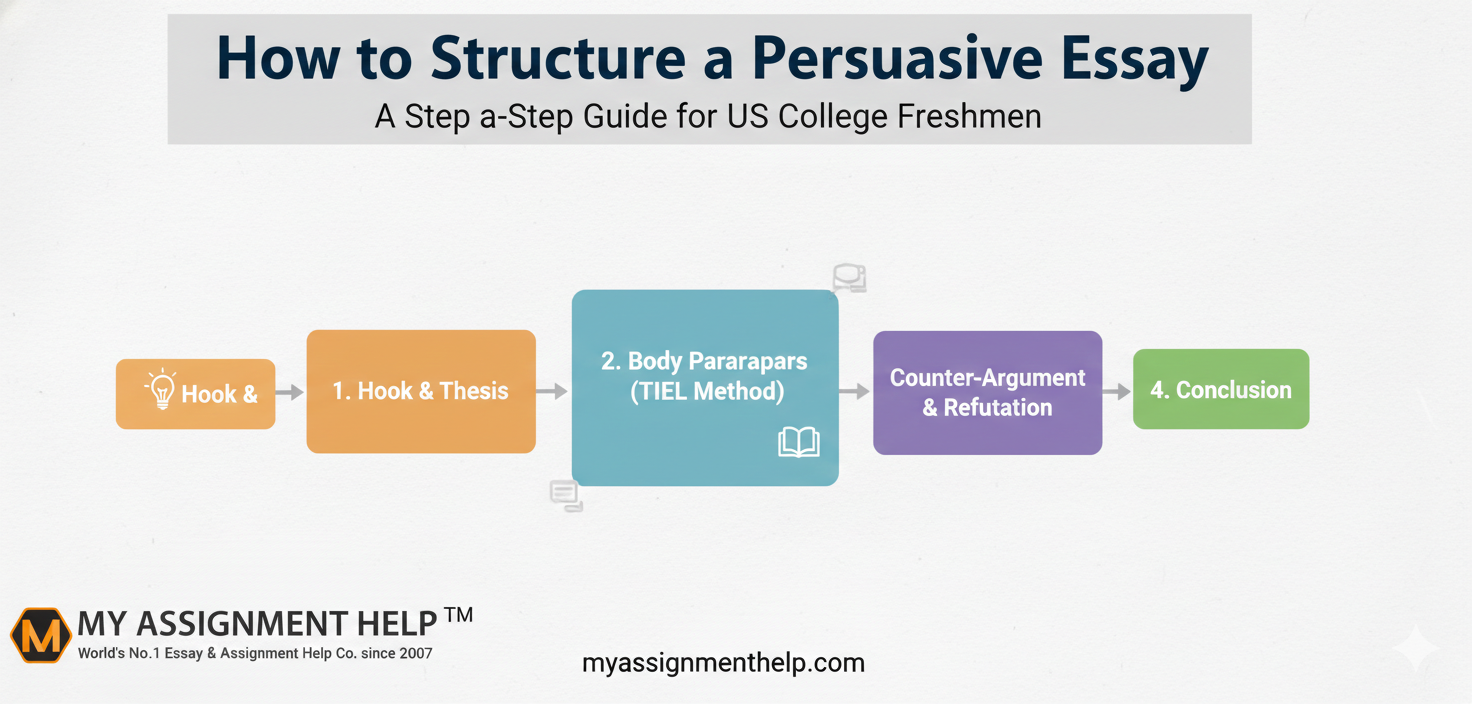
Step 1: The Hook and the Thesis Statement
Your introduction sets the tone. In the US academic system, you generally have about 30 seconds to grab the reader’s attention. Start with a “hook”—this could be a startling statistic, a provocative question, or a relevant quote. If you’re struggling to find the right opening line, checking out these essay hook examples can help you spark some creativity.
The most critical component, however, is your Thesis Statement. This is usually the final sentence of your intro. It must be:
- Arguable: Not a statement of fact.
- Focused: Specific enough to be covered in the word count.
- Roadmapped: It should subtly hint at the points you will discuss.
Step 2: The Body Paragraphs (The TIEL Method)
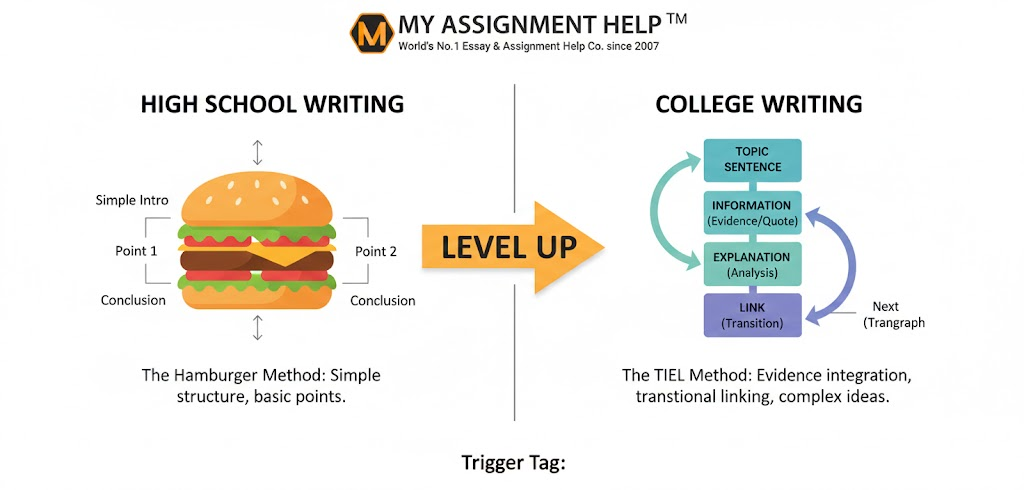
A standard US college essay uses the TIEL structure for body paragraphs to ensure maximum impact:
- Topic Sentence: State the main point of the paragraph.
- Information/Evidence: Provide data, quotes, or historical facts.
- Explanation: Explain how the evidence proves your thesis.
- Link: Transition smoothly to the next point.
Data Point: A study by the Pew Research Center suggests that readers are 40% more likely to be persuaded by an argument when it is backed by peer-reviewed data rather than anecdotal evidence. Always prioritize your college library’s databases (like JSTOR or EBSCOhost) over a general Google search.
Step 3: Addressing the Counter-Argument
This is where many freshmen stumble. To be truly persuasive in a US university setting, you must acknowledge the “other side.” This shows the professor that you have used Critical Thinking—a buzzword in US education.
- Acknowledge: “Critics argue that…”
- Refute: “However, this perspective overlooks the fact that…”
See also: DIY vs. Hiring a Fountain Tech Company: Which is Right for Your Pond?
Step 4: The Conclusion (The “So What?” Factor)
Your conclusion should not just repeat your introduction. Instead, it should synthesize your points and answer the “So What?” question. Why does your argument matter in the real world? End with a call to action or a thought-provoking final image.
Key Takeaways for Success
- Choose a Side: Neutrality is the enemy of the persuasive essay.
- Evidence is King: Use at least 2–3 credible sources per main point.
- Flow Matters: Use transition words like “Furthermore,” “Conversely,” and “Consequently.”
- Format Correctly: Ensure you are using the requested style (APA, MLA, or Chicago).
Frequently Asked Questions (FAQ)
Q: How long should a freshman persuasive essay be?
A: Typically, for freshmen (English 101 or 102), essays range from 1,000 to 1,500 words.
Q: Can I use “I” in a persuasive essay?
A: Most US professors prefer the third person (e.g., “The evidence suggests…”) to maintain objectivity, unless the prompt specifically asks for a personal narrative.
Q: What is the best way to avoid plagiarism?
A: Always cite your sources using an in-text citation and a “Works Cited” or “References” page. When in doubt, cite it!
About the Author
Dr. Sarah Jenkins is a Senior Academic Consultant at MyAssignmentHelp. With over 12 years of experience in US higher education and a PhD in English Literature from NYU, Sarah specializes in helping undergraduate students navigate the complexities of academic writing and rhetorical analysis. When she isn’t grading papers, she’s hosting webinars on the evolution of digital literacy in American colleges.
References
- National Center for Education Statistics (NCES). (2023). Writing Proficiency in Higher Education.
- Pew Research Center. (2022). The Power of Data in Modern Rhetoric.
- The Writing Center, University of North Carolina at Chapel Hill. (2024). Argumentative and Persuasive Writing.