In the dynamic world of communication, having the right equipment is fundamental to ensuring efficiency and safety across various industries. From coordinating large events to critical operations in hazardous environments, communication radios have become indispensable tools. The correct choice not only optimizes daily operations but can also be a decisive factor in emergency situations. This article will explore the key features and types of radios available, helping you make an informed decision for your specific requirements.
Radiocommunication technology has advanced significantly, offering increasingly robust and versatile solutions. Companies like Hytera, Kenwood, and Motorola lead the market with innovations ranging from compact portable radios to complex repeater systems. To explore a wide range of options and find the latest offers in radiocommunication equipment, you can visit RadioRed. Throughout this text, we will break down the different types of radios and their applications, highlighting how the right choice can boost productivity and safety in your sector.
Portable Radios: Communication at Your Fingertips
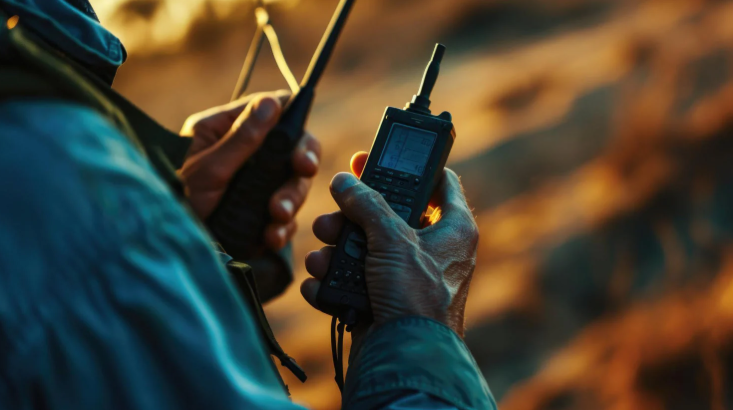
Portable radios represent the most common and versatile solution for communication on the go. Their compact and lightweight design makes them ideal tools for field workers, security personnel, logistics teams, and any professional who needs to stay connected without mobility restrictions. These devices facilitate instant and bidirectional communication, essential for quick and effective coordination. Their durability is a key factor, with many models designed to withstand adverse conditions and featuring IP certifications that guarantee water and dust resistance. Long-lasting battery life is crucial for extended workdays, ensuring constant operation when most needed. Furthermore, audio clarity is optimized with advanced voice processing technologies that minimize background noise, allowing for crisp communication even in noisy environments. No less important are the safety features, such as emergency buttons, man-down alarms, and integrated GPS, which significantly enhance user protection.
These radios find applications in various sectors. In public and private security, they are vital for patrols, surveillance, and managing mass events. In construction, they facilitate team coordination on job sites. The hospitality industry uses them for communication between service and maintenance staff, while retail employs them to coordinate personnel in large establishments.
Mobile Radios: Power and Range for Vehicles
Designed specifically for installation in vehicles, mobile radios are distinguished by offering greater transmission power and, consequently, a superior range compared to portable models. They form the backbone of transport fleets, emergency services, and logistical operations that demand uninterrupted communication along extensive routes. Their direct integration with the vehicle’s power source ensures continuous and reliable operation.
The advantages of mobile radios are notable. Their greater power allows them to cover wider geographical areas, and the use of external antennas significantly improves signal quality and range. They often incorporate advanced features such as dispatch capabilities, GPS, and integration options with other vehicle systems. Additionally, their robustness is designed to withstand the vibrations and conditions inherent in a vehicular environment.
Various sectors benefit greatly from this technology. In transport and logistics, they are fundamental for route coordination and delivery tracking. Emergency services, including ambulances, firefighters, and police, rely on them for critical communication. In mining and construction, they facilitate communication in heavy vehicles and machinery, and in agriculture, they are essential for coordination across large tracts of land.
Marine Radios: Secure Communication on Water
Communication in the marine environment presents unique challenges, stemming from humidity, salinity, and the imperative need for water resistance. Marine radios are specifically designed to operate optimally in these extreme conditions, ensuring the safety and coordination of vessels of all types, from small boats to large ships. These devices comply with rigorous international regulations governing maritime safety.
Among their essential features, their waterproofness stands out, with IPX7 or higher certifications guaranteeing their resistance to immersion. They offer specific marine channels for communication on water, including emergency frequencies. The DSC (Digital Selective Calling) function is crucial, as it allows sending distress alerts with the exact GPS position of the vessel. Finally, their corrosion resistance is achieved through the use of durable materials capable of withstanding the saline environment.
Typical users of marine radios include fishermen who need to coordinate their activities between vessels and with land. Coast guards and the navy employ them in security and rescue operations. Maritime transport relies on them for communication on cargo and passenger ships, and in water sports, they are fundamental for safety in regattas and recreational activities.
Aerial Radios: Connectivity in the Sky
Air communication is a fundamental pillar for flight safety and precise coordination between pilots and air traffic control. Aerial radios operate on specific aviation frequencies, designed to provide clear and highly reliable communication in high-speed and high-altitude environments. These highly specialized devices must comply with strict aeronautical regulations to ensure maximum safety.
Among their key aspects is their operation on specific aviation frequencies in the VHF band. Some models integrate navigation functions such as GPS and other aids. Their robustness and reliability are paramount to withstand cockpit conditions, and voice clarity is essential to avoid any misunderstandings in critical communications.
Applications of aerial radios include commercial and private aviation, facilitating communication between aircraft and control towers. They are indispensable for air traffic control in managing airspace and in air rescue services for coordination in search and rescue operations.
Intrinsically Safe Radios: Safety in Hazardous Environments
In industries where the presence of flammable gases, vapors, combustible dusts, or volatile fibers is constant, the use of electronic equipment represents an inherent risk of explosion. Intrinsically Safe (IS) radios are meticulously designed and certified to operate safely in these hazardous environments, eliminating the possibility of generating sparks or heat that could ignite an explosive atmosphere. Their implementation is vital for personnel protection and facility integrity.
These devices are governed by international regulations and certifications such as ATEX and IECEx, which guarantee that they have been rigorously tested and approved for use in explosive atmospheres. FM (Factory Mutual) certification is also common in North America.
The key benefits of IS radios are invaluable. Their design focuses on explosion prevention, limiting electrical and thermal energy to eliminate the risk of ignition. They offer personnel protection, allowing vital communication without compromising safety in high-risk areas. Furthermore, they are often extremely durable and resistant to extreme conditions.
Critical industries that rely on these radios include petrochemical and refineries, where they are essential for communication in hydrocarbon processing plants. In mining, they are crucial for underground operations with the presence of methane and coal dust. The pharmaceutical industry uses them in production in environments with combustible dusts, and emergency services, such as firefighters and rescue teams, employ them in scenarios with hazardous materials.
Radio Repeaters: Extending Your Communication Range
Repeaters are fundamental devices that receive radio signals and retransmit them with amplified power, significantly extending the effective range of communication. They are indispensable for covering vast geographical areas, overcoming challenging topographical obstacles such as mountains or tall buildings, and improving signal quality in areas with poor coverage. A well-planned repeater system is, therefore, a critical component for establishing extensive and reliable communication networks.
The operation of a repeater is ingenious: it operates on two frequencies simultaneously, one dedicated to reception and the other to transmission. When a radio emits a signal, the repeater captures it and retransmits it on the second frequency, making it possible for other radios within its new coverage area to receive it. This process creates a broader and more robust communication network, optimizing connectivity.
Implementing repeaters offers significant advantages. They provide greater coverage, extending the communication range of portable and mobile radios. They contribute to improved signal quality, reducing interference and noise for clearer communications. They allow for resource optimization, as fewer radios can cover a larger area. Additionally, they offer flexibility, being either fixed or mobile to adapt to various operational needs.
Their common applications are found in large facilities such as factories, university campuses, and shopping centers. They are vital in rural areas to provide coverage in regions with poor communication infrastructure. Emergency services use them for their communication networks, and security companies for coordinating their personnel on large properties.
Radio Accessories: Maximizing Functionality
Radio accessories are complementary components that enhance and improve the functionality of communication equipment, allowing for their adaptation to specific needs and optimizing the user experience. From higher-capacity batteries to specialized headsets, choosing the right accessories can make a substantial difference in the efficiency and comfort of using the devices.
Essential accessory types include batteries and chargers, which encompass spare or higher-capacity batteries, as well as fast and multi-chargers to ensure equipment is always operational. Headsets and microphones offer hands-free solutions, noise-canceling headsets, and lapel or throat microphones for discreet communication or in noisy environments. Antennas can be high-gain for improved range or discreet for portable radios. Cases and clips protect the radio from bumps and drops, facilitating its transport. Finally, programming software allows for customizing radio functions such as channels, tones, and security settings.
The benefits of using accessories are clear. They provide greater convenience, facilitating prolonged use in various situations. They offer extended functionality, allowing the radio to be adapted to specific tasks. They contribute to equipment protection, prolonging its lifespan, and improve safety, such as noise-canceling headsets that protect user hearing.
Technological Advancements in Radiocommunication: The Future is Now
Radiocommunication is not a static technology; it is constantly evolving, driven by the demand for greater efficiency, security, and versatility. Recent innovations are transforming how industries communicate, offering smarter and more connected solutions.
Digital Mobile Radio (DMR): The New Era of Communication
The transition from analog to digital radio, particularly with the Digital Mobile Radio (DMR) standard, has brought significant improvements. DMR radios offer superior audio quality, greater spectral efficiency (allowing more users in the same bandwidth), advanced features such as text messaging and integrated GPS, and longer battery life. Furthermore, digital encryption provides enhanced security for sensitive communications.
Push-to-Talk over Cellular (PoC): Communication Without Distance Limits
PoC technology combines the immediacy of PTT (Push-to-Talk) communication with the broad coverage of cellular networks (2G/3G/4G/LTE and even 5G). This allows users to communicate instantly across long distances, without the range limitations of traditional radios. PoC devices, such as those offered by RadioRed, are ideal for companies with geographically distributed operations, offering a cost-effective alternative to conventional radio systems for certain applications. Integration with dispatch and fleet management applications further expands their capabilities.
See also: DIY vs. Hiring a Fountain Tech Company: Which is Right for Your Pond?
Radios with Artificial Intelligence and IoT Connectivity
The future of radiocommunication is envisioned with the integration of artificial intelligence (AI) and the Internet of Things (IoT). AI can improve noise cancellation, optimize network management, and predict equipment failures. IoT connectivity will allow radios to integrate with sensors and other devices, creating smarter and more automated communication ecosystems, especially relevant in industrial and security environments.
How to Choose the Right Radio: Key Considerations
Selecting the perfect communication radio requires a careful evaluation of your specific needs. Here are some crucial factors to consider:
•Usage Environment: It is essential to determine whether the radio will be used indoors, outdoors, in vehicles, at sea, or in hazardous environments, as this will directly influence the choice of radio type (portable, mobile, marine, IS).
•Range and Coverage: Evaluate the distance you need to cover, which will determine the required radio power and the potential need for repeaters.
•Required Features: Identify if you need specific features such as GPS, emergency calls, encryption, text messaging, or integration with other systems.
•Durability and Resistance: Consider whether the radio will be exposed to water, dust, impacts, or extreme temperatures, and look for appropriate IP certifications and military standards.
•Budget: Prices vary considerably depending on features and brand, so it is important to balance needs with available investment.
•Local Regulations: Ensure that the equipment complies with all current frequency and usage regulations in Mexico.
Conclusion: Effective Communication is the Key to Success
In summary, choosing an appropriate radiocommunication system is a strategic investment that directly impacts the operational efficiency and security of any organization. From versatile portable radios to specialized intrinsically safe equipment and advanced PoC systems, current technology offers a solution for every challenge. By carefully considering the usage environment, necessary functions, and technological advancements, companies can ensure fluid and reliable communication, fundamental for success in today’s competitive market. Continuous innovation in the sector guarantees that radiocommunication tools will remain a fundamental pillar for connectivity and productivity. To explore the latest developments and find the perfect equipment for your needs, visit RadioRed.