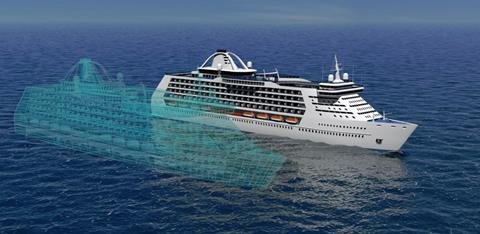
Shipbuilding has always been a complex blend of science, engineering, and practical experience. Designing a vessel capable of crossing oceans safely while carrying cargo, passengers, or equipment requires careful planning and detailed analysis. In earlier decades, naval architects relied heavily on physical prototypes, towing tank experiments, and repeated design iterations to refine a vessel’s performance. These methods provided valuable insights but often required significant time and financial investment.
In recent years, technological advances have begun transforming the field of ship design. Among the most influential developments are Computational Fluid Dynamics (CFD) and digital twin technology. These tools allow engineers to simulate and analyze ship performance in virtual environments before a vessel is ever constructed.
By 2026, many shipbuilders and maritime engineers rely on CFD simulations and digital twin models to optimize hull performance, reduce energy consumption, and shorten development timelines. Instead of building multiple prototypes or conducting lengthy physical experiments, designers can test thousands of design variations using advanced computing systems.
The integration of CFD and digital twins represents a major step forward for ship design, enabling more efficient development processes while improving vessel performance and operational reliability.
Understanding the Foundations of Modern Ship Design
Ship design is the discipline responsible for creating vessels that can safely operate in complex marine environments. Naval architects must consider numerous factors when developing a new vessel, including hydrodynamic efficiency, structural integrity, stability, propulsion systems, and operational requirements.
Historically, these challenges were addressed through a combination of theoretical calculations and physical model testing. Scale models of ships were often placed in towing tanks to evaluate resistance and flow patterns. Engineers observed how water moved around the hull and used these observations to refine the design.
While this approach remains valuable, it is time-consuming and can limit the number of design variations that engineers can explore. Modern ship design increasingly relies on digital technologies that allow designers to test ideas quickly and analyze performance with remarkable precision.
CFD simulations and digital twin systems now play a central role in this process, enabling engineers to predict vessel behavior long before construction begins.
What Is Computational Fluid Dynamics in Ship Design?
Computational Fluid Dynamics, commonly known as CFD, is a simulation technology used to analyze how fluids behave around objects. In ship design, CFD allows engineers to study how water flows around the hull, propellers, and other structural elements.
Instead of relying solely on physical testing, engineers use advanced computer models to simulate water movement and calculate forces acting on the vessel. These simulations can reveal critical information about hydrodynamic resistance, wave generation, turbulence, and propulsion efficiency.
By examining these factors in a virtual environment, naval architects can refine hull shapes to minimize drag and improve fuel efficiency. Small adjustments to the curvature of a hull or the position of a propeller can significantly affect overall vessel performance.
CFD simulations also allow engineers to study how ships behave under different conditions, including varying speeds, sea states, and loading configurations. This flexibility enables designers to explore a wide range of design possibilities without the cost and time associated with building multiple physical models.
How CFD Improves Efficiency and Performance
One of the primary benefits of CFD in ship design is the ability to evaluate hydrodynamic performance early in the design process. Engineers can test different hull forms and compare their resistance characteristics using detailed simulations.
These insights allow designers to identify shapes that reduce friction and wave resistance. Lower resistance means the vessel requires less propulsion power, which directly improves fuel efficiency and reduces operating costs.
CFD also provides valuable information about propeller performance and wake flow patterns. Understanding how water moves around the propeller helps engineers design propulsion systems that maximize thrust while minimizing energy losses.
Another advantage of CFD is the ability to visualize flow patterns in detail. Engineers can see how water moves across the hull surface and identify areas where turbulence or pressure changes occur. These insights allow designers to refine their designs with greater accuracy.
Although CFD simulations require powerful computing resources and careful validation, they have become an essential tool in modern ship design due to their ability to accelerate development and improve performance outcomes.
Digital Twins and the Next Evolution of Ship Design
While CFD focuses primarily on design-stage analysis, digital twin technology extends the concept of simulation throughout the entire lifecycle of a vessel.
A digital twin is a virtual representation of a physical ship that mirrors its real-world performance. This digital model is continuously updated using data collected from onboard sensors and monitoring systems.
During the ship design phase, engineers create detailed digital models that represent the vessel’s structure, propulsion systems, and operational behavior. Once the ship enters service, real-time data feeds into the digital twin, allowing engineers to monitor performance and identify potential issues.
Digital twins allow ship operators to analyze how a vessel behaves under different conditions and predict maintenance needs before problems occur. This predictive capability can significantly reduce downtime and maintenance costs.
In ship design, digital twins also help engineers evaluate how design choices affect long-term performance. By comparing simulated behavior with real-world data, designers can refine future ship designs and improve reliability.
Integrating CFD and Digital Twins in Ship Design
The combination of CFD and digital twin technology creates a powerful framework for improving ship design. CFD simulations generate detailed insights into hydrodynamic performance during the design phase, while digital twins extend this analysis into real-world operations.
When a ship enters service, data collected from sensors can be compared with the original CFD predictions. Engineers can evaluate how closely real-world performance matches simulated models and adjust their calculations accordingly.
This feedback loop allows naval architects to continuously improve design accuracy. Each new vessel benefits from insights gathered from previous ships, creating a cycle of ongoing optimization.
For shipbuilders and operators, this integration offers significant advantages. Design decisions become more data-driven, and operational performance can be monitored with greater precision.
Reducing Costs and Development Time
One of the most compelling benefits of CFD and digital twin technology is the ability to reduce development costs and shorten project timelines. Traditional ship design processes often involved building multiple scale models and conducting extensive physical testing.
By contrast, digital simulations allow engineers to explore thousands of design variations quickly. Potential problems can be identified and resolved early in the design process, reducing the likelihood of costly modifications later.
Digital twins also help ship operators optimize maintenance schedules and detect inefficiencies. Predictive maintenance systems can identify early signs of mechanical wear or performance degradation, allowing repairs to be scheduled before failures occur.
These efficiencies contribute to lower lifecycle costs and improved operational reliability. As computing power continues to increase, the role of digital technologies in ship design will likely expand even further.
Challenges and Limitations of Digital Ship Design Tools
Despite their advantages, CFD and digital twin technologies are not without challenges. High-quality simulations require accurate input data and sophisticated modeling techniques. If models are poorly calibrated or incomplete, simulation results may not reflect real-world behavior accurately.
CFD simulations also require significant computational resources, particularly when modeling complex hydrodynamic interactions or turbulent flows. Engineers must balance simulation accuracy with computational efficiency.
Digital twin systems rely heavily on sensor data and data integration systems. Ensuring reliable data collection and secure communication between onboard systems and digital platforms is essential for maintaining accurate models.
Even with these challenges, the benefits of digital technologies in ship design far outweigh the limitations, especially as software tools and computing infrastructure continue to improve.
The Future of Digital Ship Design
As maritime technology evolves, digital engineering tools are expected to become even more deeply integrated into ship design processes. Artificial intelligence and machine learning may soon assist engineers in analyzing simulation results and identifying optimal design configurations.
Advanced sensors and connectivity systems will allow digital twins to collect more detailed operational data, improving predictive maintenance and performance monitoring.
These innovations could lead to a future where ship designs are continuously refined through real-world feedback, creating vessels that are safer, more efficient, and more environmentally sustainable.
The increasing availability of high-performance computing resources will also allow more complex simulations to be performed faster, enabling naval architects to explore innovative design concepts that were previously impractical.
Frequently Asked Questions About Ship Design and CFD
What is CFD in ship design?
Computational Fluid Dynamics is a simulation technology used to analyze how water flows around a ship’s hull and propulsion system. It helps engineers understand hydrodynamic behavior and improve vessel efficiency.
What is a digital twin in maritime engineering?
A digital twin is a virtual model of a physical ship that mirrors its performance using real-time data collected from onboard sensors.
How does CFD reduce ship design costs?
CFD allows engineers to test multiple design variations in virtual simulations instead of building physical prototypes, saving time and development costs.
Can digital twins predict ship maintenance needs?
Yes. Digital twins analyze operational data and detect patterns that may indicate equipment wear or system inefficiencies, enabling predictive maintenance.
Are CFD simulations completely accurate?
CFD simulations provide highly detailed insights, but they depend on accurate models and validation against experimental data to ensure reliability.
Why are digital technologies important in modern ship design?
Digital tools allow engineers to simulate performance, analyze operational data, and optimize vessel efficiency throughout the ship’s lifecycle.
Conclusion: Digital Engineering Is Reshaping Ship Design
Ship design has always relied on a combination of engineering knowledge, experimentation, and practical experience. Today, advanced digital technologies are transforming how naval architects approach this complex discipline.
Computational Fluid Dynamics allows engineers to analyze hydrodynamic performance with remarkable precision, helping optimize hull shapes and propulsion systems before construction begins. Digital twin technology extends this capability beyond the design phase, providing continuous insight into vessel performance throughout its operational life.
Together, these tools enable faster development cycles, lower costs, and improved vessel efficiency. Engineers can test ideas virtually, monitor real-world performance, and refine future ship designs using detailed operational data.
As computing power continues to grow and digital technologies become more sophisticated, the role of CFD and digital twins in ship design will only expand. These innovations are not only accelerating the design process but also helping create ships that are safer, more efficient, and better prepared for the demands of modern maritime transportation.
In an industry where performance, reliability, and sustainability are increasingly important, the integration of advanced digital tools represents a powerful step forward for the future of ship design.