In the rapidly evolving world of technology, one of the most groundbreaking advancements is the development of neural interfaces. These devices bridge the gap between the human brain and external systems, enabling direct communication between neurons and computers. Neural interfaces are poised to transform medicine, communication, robotics, gaming, and human-computer interaction, ushering in an era where thought alone can control machines.
What Are Neural Interfaces?
A neural interface, also known as a brain-computer interface (BCI) or brain-machine interface (BMI), is a technology that establishes a direct link between the nervous system and an external device. Neural interfaces work by detecting, interpreting, and sometimes stimulating neural activity to enable bidirectional communication between the brain and machines.
Unlike traditional input methods—keyboards, touchscreens, or voice—neural interfaces can read intentions and commands directly from the brain. This technology is particularly transformative for individuals with disabilities, providing new ways to interact with the environment and enhancing human capabilities.
Neural interfaces can be classified into three main types:
- Invasive Neural Interfaces – Electrodes are implanted directly into the brain tissue. They provide high-resolution signals but require surgery and carry medical risks.
- Partially Invasive Neural Interfaces – Electrodes are placed inside the skull but not in the brain tissue itself. They are less risky than fully invasive interfaces but offer moderate signal clarity.
- Non-Invasive Neural Interfaces – Devices such as EEG (electroencephalography) caps or wearable sensors detect brain activity externally. While safer and easier to deploy, they offer lower signal precision.
How Neural Interfaces Work
Neural interfaces operate through several key steps:
- Signal Acquisition – Electrodes or sensors detect electrical impulses generated by neurons. Invasive interfaces pick up signals directly from the brain, while non-invasive devices measure signals through the scalp or peripheral nerves.
- Signal Processing – Raw neural data is filtered, amplified, and cleaned to remove noise.
- Feature Extraction – Relevant patterns or spikes in neural activity are identified and interpreted as commands or intentions.
- Translation – Algorithms, often powered by machine learning, convert neural patterns into actionable commands for computers, prosthetics, or other devices.
- Device Control and Feedback – The interpreted signals control an external device, while sensory feedback may be delivered to the user for a closed-loop system.
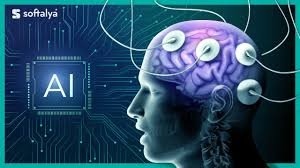
Advanced neural interfaces often integrate AI to improve signal interpretation and adapt to an individual’s unique brain patterns over time.
See also: Communication Challenges in Technology
Applications of Neural Interfaces
Neural interfaces have a wide range of applications, transforming medicine, human-computer interaction, and even entertainment:
1. Medical Rehabilitation and Assistive Devices
Neural interfaces are revolutionizing healthcare by helping individuals with neurological disorders or physical disabilities:
- Prosthetic Control – Neural interfaces allow amputees to control robotic limbs with thought, restoring mobility and independence.
- Spinal Cord Injury Recovery – Interfaces can stimulate nerves and muscles to restore movement or improve motor function.
- Stroke Rehabilitation – Brain activity monitoring helps tailor rehabilitation exercises and track recovery progress.
- Assistive Communication – Patients with ALS or locked-in syndrome can communicate using neural signals to control speech-generating devices.
2. Cognitive Enhancement and Brain Stimulation
Neural interfaces can modulate brain activity to enhance cognition, memory, or attention:
- Neurofeedback – Users receive real-time feedback on brain activity to improve focus or reduce anxiety.
- Cognitive Training – Interfaces help optimize learning by adapting tasks based on neural responses.
- Deep Brain Stimulation (DBS) – Invasive interfaces can treat conditions like Parkinson’s disease, epilepsy, or depression.
3. Human-Computer Interaction
Neural interfaces redefine the way humans interact with computers:
- Hands-Free Control – Users can control devices, apps, or software directly with their thoughts.
- VR and AR Integration – Brain-controlled virtual and augmented reality experiences create fully immersive interactions.
- Smart Home and IoT Control – Neural interfaces allow seamless control of connected devices in the home environment.
4. Robotics and Automation
Neural interfaces enable intuitive control of robots and autonomous systems:
- Robotic Exoskeletons – Enhance mobility for patients with paralysis or elderly individuals.
- Remote Robotics – Operators can control drones, industrial robots, or surgical tools remotely using neural commands.
5. Gaming and Entertainment
The gaming industry is exploring neural interfaces to create immersive experiences:
- Thought-Controlled Gaming – Players can perform in-game actions using neural signals.
- Immersive VR Experiences – Brain activity adjusts game environments or difficulty dynamically.
- Adaptive Storytelling – Games respond to player emotions detected through neural interfaces, creating personalized experiences.
6. Research and Neuroscience
Neural interfaces are invaluable tools for studying brain function, cognition, and neurological diseases:
- Mapping neural pathways and brain activity in real time.
- Understanding brain disorders and developing targeted therapies.
- Exploring human-computer symbiosis and neuroplasticity.
Benefits of Neural Interfaces
Neural interfaces offer numerous benefits across medical, industrial, and consumer applications:
- Enhanced Mobility and Independence – Restores movement and communication for disabled individuals.
- Hands-Free Interaction – Enables direct control of devices without physical input.
- Real-Time Feedback – Provides instant data for rehabilitation, learning, or entertainment.
- Personalized Therapy – Tailors medical and cognitive interventions to individual neural responses.
- Innovation in Human-Machine Collaboration – Expands the ways humans interact with technology.
Challenges and Ethical Considerations
Despite the promise of neural interfaces, several challenges and ethical issues need careful attention:
1. Technical Challenges
- Signal Precision – Non-invasive devices may struggle with noise and low resolution.
- Device Longevity – Implanted devices must function safely over long periods.
- Data Processing – Interpreting complex brain signals requires advanced algorithms and AI.
2. Medical Risks
Invasive interfaces carry surgical risks, including infection or tissue damage. Long-term safety and side effects are still under study.
3. Privacy and Security
Brain data is extremely sensitive. Unauthorized access or misuse could lead to mental privacy violations or manipulation.
4. Ethical Concerns
- Cognitive enhancement raises questions about fairness and equity.
- Mind-controlled systems may blur boundaries between human and machine autonomy.
- Neuroethics must guide responsible use in healthcare, military, and consumer applications.
5. Accessibility and Cost
High costs and specialized technology limit access, potentially creating disparities in healthcare and human augmentation.
The Future of Neural Interfaces
The future of neural interfaces is extremely promising, with rapid advancements in AI, materials, sensors, and neuroscience:
- Next-Generation Non-Invasive Devices – Smaller, wearable, and wireless interfaces for everyday use.
- Brain-to-Brain Communication – Early experiments suggest humans could transmit thoughts directly to each other.
- Integration with AI – AI-powered neural interfaces will improve signal interpretation and adaptive control.
- Enhanced Prosthetics and Robotics – More natural, intuitive control of robotic limbs and exoskeletons.
- Consumer Applications – Gaming, education, and smart home control using thought-based interaction.
- Neuro-Medicine and Disease Prediction – Predictive neural analytics for early detection of brain disorders.
Companies like Neuralink, Kernel, and CTRL-Labs are pioneering neural interface technology, aiming to make brain-machine interaction safe, effective, and accessible.
Conclusion
Neural interfaces represent a revolutionary leap in human-computer interaction, enabling the brain to communicate directly with machines. From restoring mobility and independence for disabled individuals to enhancing cognitive function, gaming experiences, and robotic control, neural interfaces are reshaping technology and human potential.
While challenges such as safety, privacy, cost, and ethics remain, the potential benefits are transformative. As AI, neuroscience, and sensor technology advance, neural interfaces will become increasingly integrated into medicine, industry, entertainment, and daily life.
The era where thoughts control machines is no longer science fiction—it is rapidly becoming reality. Neural interfaces are poised to redefine how humans interact with the world, bridging biology and technology in unprecedented ways.